Breaking the Chain of HIV Transmission by Addressing a Marginalized Population: Formerly Incarcerated Individuals
Everyone should be screened for HIV. Some people should be screened one time, but for people who have greater exposure to HIV through sex or drug use, screening should be done at regular intervals. Not only will screening identify people who are living with HIV so they can begin highly effective treatment, but testing can also lead to very important discussions about preventing HIV in people who have elevated risk of acquiring HIV. Nearly 40% of new HIV diagnoses originate from people who are unaware of their HIV status, so screening people for HIV is critical to ending the epidemic.
Unfortunately, people who don't have a regular source of health care may miss out on routine screenings and preventive health interventions. As the popularity of on-demand healthcare solutions such as urgent and convenient care clinics rises, so too does the need for providers in those settings to screen their patients and discuss their sexual health.
In addition to barriers to healthcare access, discomfort, stigma, discrimination, and lack of knowledge are also significant barriers to improving sexual health-related outcomes. Conversations about sexual health that should begin in the clinic are often avoided by both healthcare providers and patients. Health care providers may be uncomfortable or not skilled at asking questions, and they may use language that prevents patients from feeling safe enough to be open and honest.
The solution is rooted in cultural humility, which can foster positive interactions and engagement between patients and their health care providers. Cultural humility is a continuous process of self-exploration and self-critique combined with a willingness to learn from others. People who practice cultural humility enter a relationship with another person with the intention of honoring their beliefs, customs, and values. For people who often experience stigma and discrimination in health care settings, relationships with health care providers who practice cultural humility may offer them better health outcomes.i
Groups That Can Greatly Benefit from Cultural Humility
Practicing cultural humility benefits people who have been stigmatized, including people from sexual or gender minority groups,ii who have experienced discrimination, stigma, denial or refusal of services, and verbal or physical abuse in health care settings.iii iv One in five trans persons has avoided seeking medical care because of past negative experiences and transphobia in medical settings.v
Early HIV diagnosis and treatment can promote better long-term health and help people living with the virus live long and healthy lives. For nearly a decade, we have known that initiating treatment for HIV before the virus compromises the immune system preserves health and lowers the risk of progressing to stage 3 HIV (AIDS), developing other serious health conditions, and of dying.i We also know that currently available treatments can lead to viral suppression, which can render HIV untransmittable.
Unfortunately, 13% of people living with HIV in the United States have not received a diagnosis, so they do not know that they are living with HIV.ii This lack of knowledge adversely affects the health of the individual but also allows for onward transmission of HIV. About 40% of new HIV diagnoses are attributed to individuals who have not yet been diagnosed with HIV.iii
HIV Challenges for Formerly Incarcerated Individuals
About eight out of ten people in jail or prison report having used illicit drugs.v After release from incarceration, illicit drug use increases — especially in the year after prison release.vi Drug use makes formerly incarcerated people more likely to engage in behaviors that expose them to HIV, such as having unprotected sex and using unsterilized needles to inject drugs.
Besides having a higher risk of acquiring HIV than the general population, the ''re-entry'' population faces many hurdles to accessing health care.
Many formerly incarcerated individuals lack the education and work experience required to work in various industries, limiting their job opportunities. Additionally, former inmates may undergo rigorous background checks, limiting their chances of landing roles.vii
Because of their criminal record and the hurdles formerly incarcerated individuals have to go through during job searches, many struggle to find vacancies, and it's estimated about 60% of formerly incarcerated people in the United States are jobless.viii
As a result, many formerly incarcerated people have no source of income and no health insurance to cover the costs of HIV testing and treatment.
Aside from financial constraints and insurance issues, formerly incarcerated individuals face stigma, mental health challenges, poor health literacy, systemic racism, and substance use disorders---all of which create more barriers.
Potential Solutions to HIV Challenges for Formerly Incarcerated Individuals
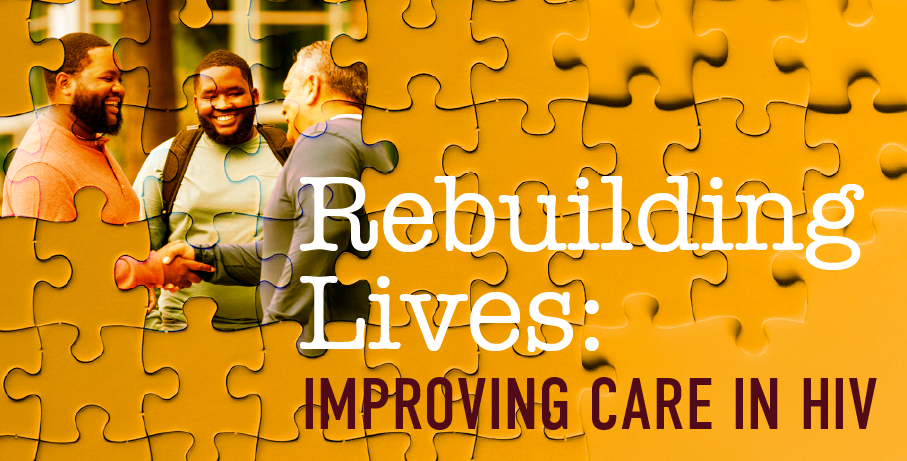
DKBmed, in collaboration with Chainless Change, a Florida-based re-entry agency, has developed a multifaceted program called Rebuilding Lives: Improving Care in HIV, with the goal of improving care of formerly incarcerated individuals.
Our pilot program will address the critical gaps in HIV prevention and care through a combined clinical and community outreach approach. The program will help formerly incarcerated individuals reintegrate back into society by:
- Providing training: DKBmed will provide onsite training for Chainless Change counselors. The comprehensive training will include education about the prevalence of HIV and other sexually transmitted infections; HIV screening recommendations; HIV prevention, including the use of HIV pre-exposure prophylaxis (PrEP); and tools to initiate conversations about HIV and other STIs with their clients.
- Conducting community outreach: DKBmed, Chainless Change, and Holy Cross Health will provide onsite screening for several medical conditions (HIV, hepatitis C, syphilis, hypertension, cholesterol, and diabetes) at a community health fair on November 9 from 11:30 AM to 3:30 PM at Reverend Samuel Delevoe Memorial Park.
- Offering clinician education: An online webcast that includes education about the barriers to preventive care, the importance of employing cultural humility when treating people from traditionally marginalized populations, and medications to prevent and treat HIV, will be shared with clinicians seeing patients in the Ft. Lauderdale community.
- Providing a client-clinician referral network: We will roll out a client-clinician referral network that will provide counselors at Chainless Change with a database of local clinicians to whom they can refer their clients for screening and treatment.
Contact us to discover more about Rebuilding Lives: Improving Care in HIV or to learn more about our work with formerly incarcerated populations.
References
- https://www.nih.gov/news-events/news-releases/early-hiv-diagnosis-treatment-important-better-long-term-health-outcomes
- https://www.hiv.gov/hiv-basics/overview/data-and-trends/statistics
- https://pubmed.ncbi.nlm.nih.gov/10474559/
- https://www.cdc.gov/hiv/testing/index.html
- https://hivinfo.nih.gov/understanding-hiv/fact-sheets/hiv-and-older-people
- https://www.nmac.org/wp-content/uploads/2013/02/Incarceration-Report-FINAL_2-6-13_Two.pdf
- https://ascpjournal.biomedcentral.com/articles/10.1186/s13722-019-0136-6
- https://www.sciencedirect.com/science/article/abs/pii/S0277953619303387